

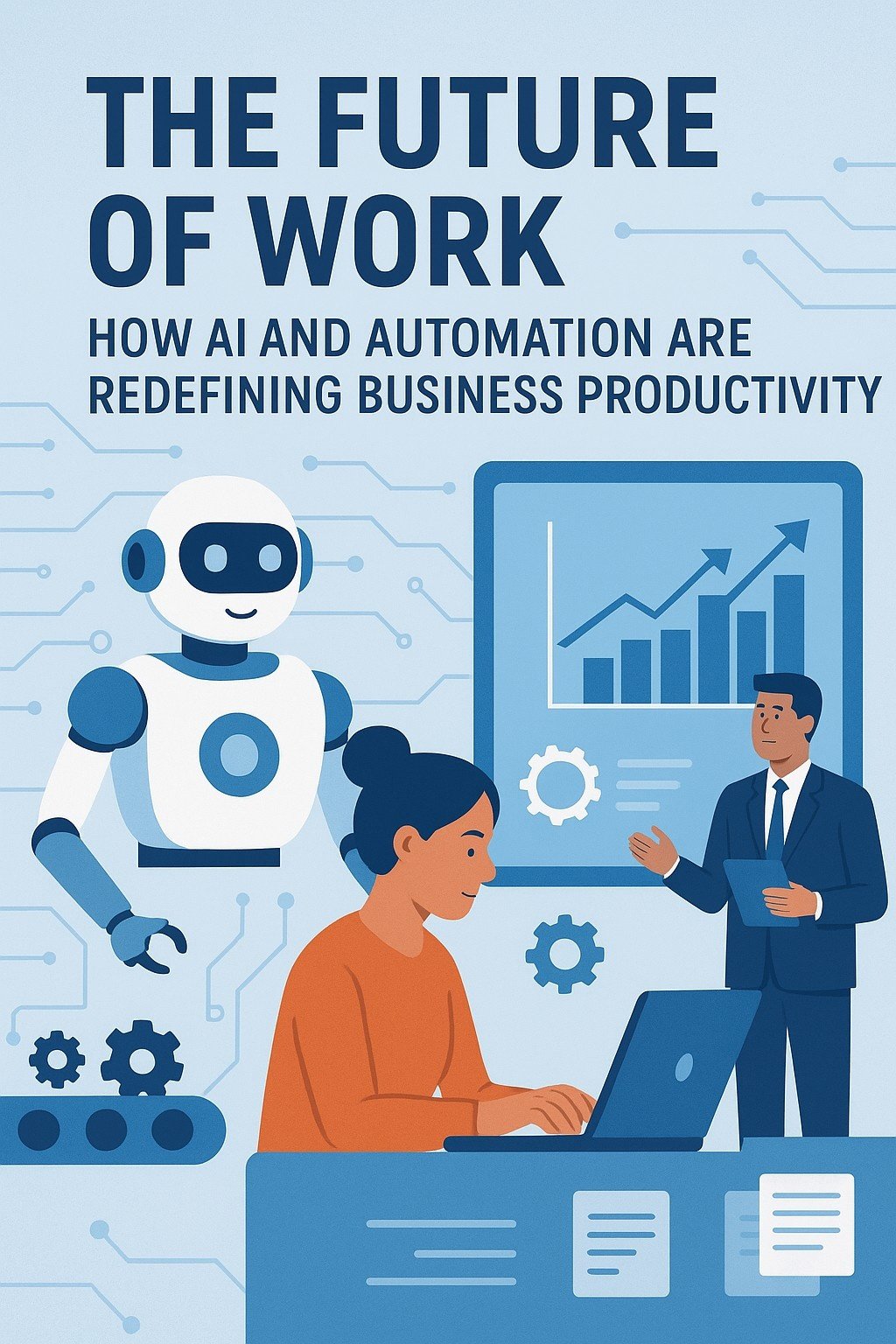

In today’s fast-paced digital era, every minute counts. Yet, in most organizations, employees spend a surprising amount of time on repetitive and manual tasks — entering data, updating spreadsheets, sending routine emails, or generating reports. These processes may seem small on their own, but over time, they drain energy, reduce efficiency, and slow down innovation.
This is where AI automation and workflow automation step in — transforming the way businesses operate, save time, and unlock human potential.
The Power of AI and Automation in Modern Workflows
Artificial Intelligence (AI) and automation are no longer futuristic concepts — they are practical, accessible tools that empower teams to focus on what really matters. By automating redundant processes and enabling systems to “think” intelligently, businesses can achieve faster turnaround times, fewer errors, and higher overall productivity.
Imagine this:
• Customer requests are automatically logged, categorized, and assigned.
• Reports are generated and shared without anyone clicking a button.
• Alerts are sent the moment something needs attention — not after a delay.
This is the real promise of AI and automation — making work smoother, smarter, and more human.
How Microsoft Power Platform Makes Automation Simple
Microsoft’s Power Platform has become one of the most powerful ecosystems for building automated, data-driven, and AI-enabled solutions — all without needing deep coding knowledge. It’s built to empower everyone, from business users to developers, to innovate faster and smarter.
Here’s how each component helps businesses grow:
• Power Apps: Build tailor-made applications for your organization without complex development. Quickly digitize manual processes and connect your data sources with just a few clicks.
• Power Automate: Simplify repetitive tasks with intelligent workflow automation — from approvals and email alerts to multi-step integrations across Microsoft 365, SharePoint, or third-party apps.
• Power BI: Visualize your business data in real time and uncover insights that drive better decisions.
• Power Virtual Agents: Create AI-powered chatbots that can handle customer or employee queries 24/7, freeing up your team’s valuable time.
By integrating AI, low-code development, and data analytics, the Power Platform brings automation and intelligence together — helping companies modernize without complexity.
The Real Business Impact of Automation
Adopting AI and automation through Power Platform isn’t just about saving time — it’s about transforming how your organization works.
Here’s what businesses experience:
• Higher efficiency: Processes run faster and smoother with minimal human intervention.
• Reduced errors: Automated systems ensure accuracy and consistency across workflows.
• Increased agility: Businesses can adapt quickly to new challenges without costly reworks.
• Empowered teams: Employees can build their own solutions, reducing dependence on IT departments.
Most importantly, automation frees up your team to focus on strategic and creative tasks that truly move the business forward.
Building a Smarter and More Sustainable Future
As companies embrace digital transformation, the combination of AI, automation, and low-code platforms like Microsoft Power Platform is setting a new standard for innovation. These technologies not only streamline operations but also support sustainable business growth by reducing waste, optimizing energy use, and improving resource allocation.
The result?
A workplace that is more connected, efficient, and human-centered.
Automation doesn’t replace people — it amplifies their potential.
Final Thoughts
The future of business belongs to those who automate intelligently. With Microsoft Power Platform, companies can bridge the gap between people and technology — enabling smarter decisions, faster innovation, and sustainable growth.
Let automation handle the routine, and let your people focus on what matters most: creativity, strategy, and meaningful impact.